Learning celestial navigation before we go to sea
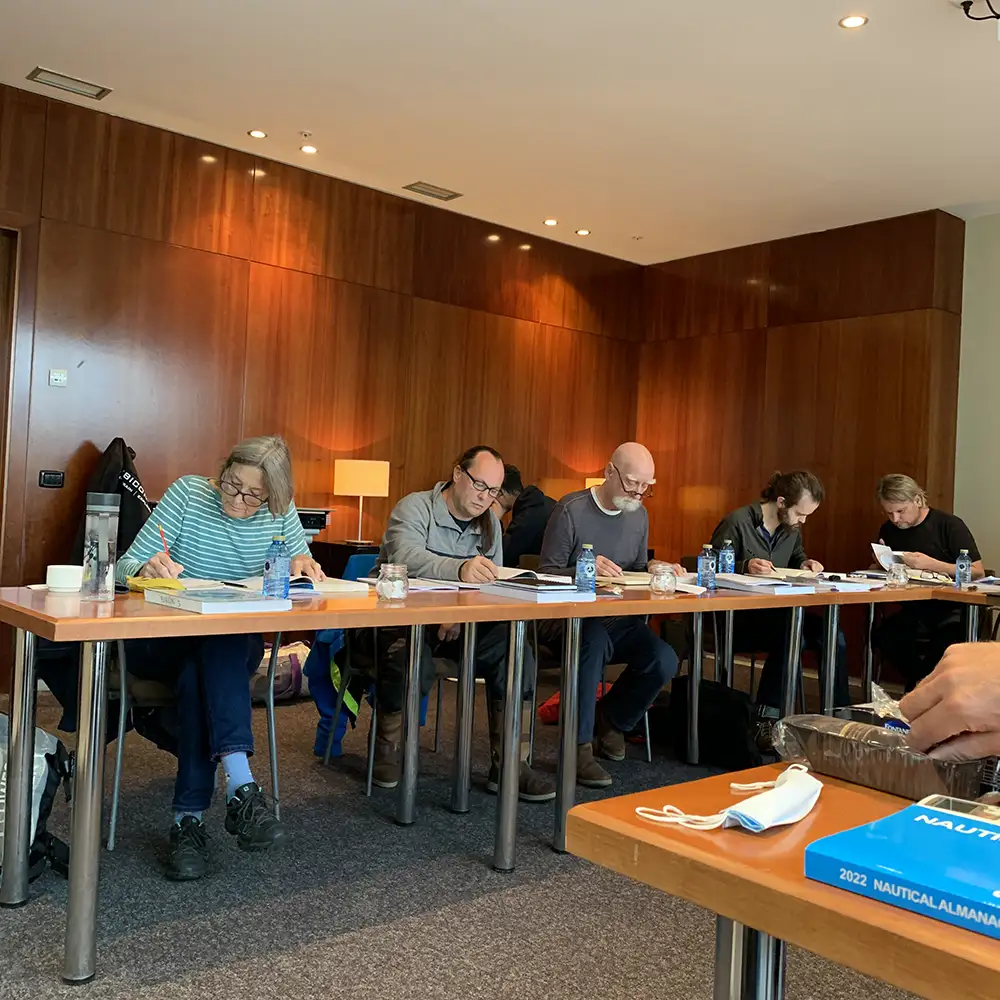
Before setting off across the Atlantic, we spend two full days ashore in the Caribbean learning celestial navigation, without the distractions of watches, fatigue, or sea state. The syllabus covers:
- Using a sextant
- Finding and choosing the right celestial body
- Use of the nautical almanac and sight reduction tables
- Finding and plotting position
This is not academic teaching and there are no exams. Everything taught is practical and immediately used once we are sailing. Rubicon 3 is regarded in the industry as best in class for its celestial course and its clear, straightforward approach. Evenings are relaxed, with time ashore to enjoy the island before final preparations are made on board.
Shakedown sailing and putting it into practice
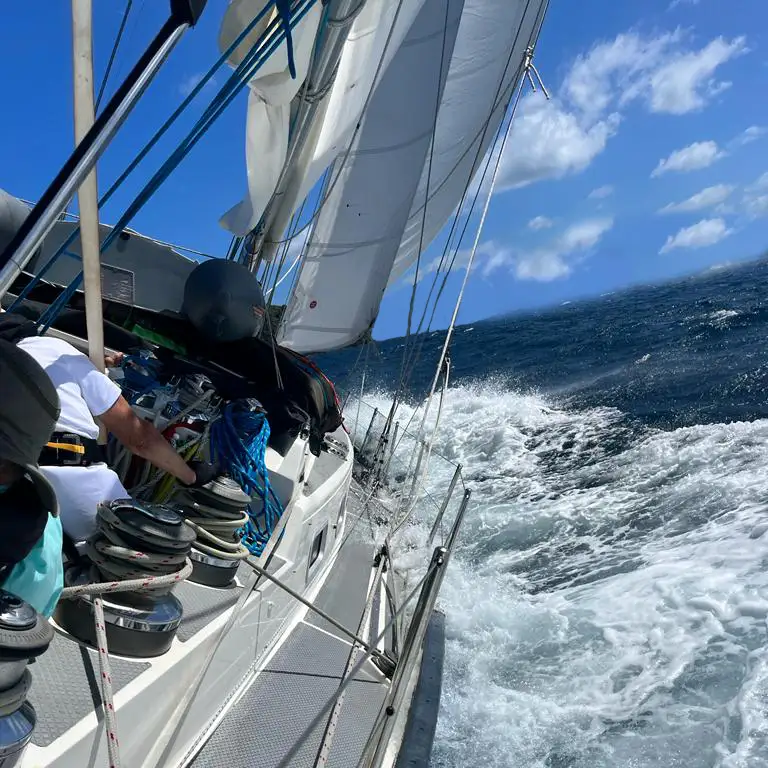
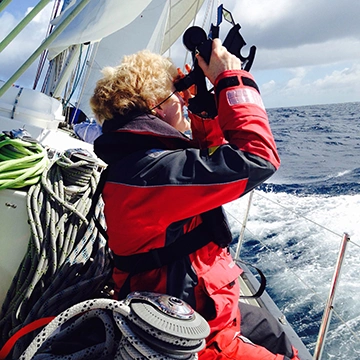
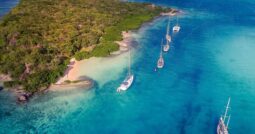
We then spend a day or two sailing and training around the islands. This gives everyone time to settle into the yacht, refresh seamanship skills, and begin using the sextant at sea. This is where the learning clicks. You will start taking sights on deck, reducing them below, and seeing how your calculated position compares with the boat’s actual progress. Mistakes are expected at this point but confidence builds quickly. Conditions here are ideal for learning. Warm trade winds, steady sailing, and short nights give us time to come together as a crew without pressure.
North towards Bermuda – without GPS
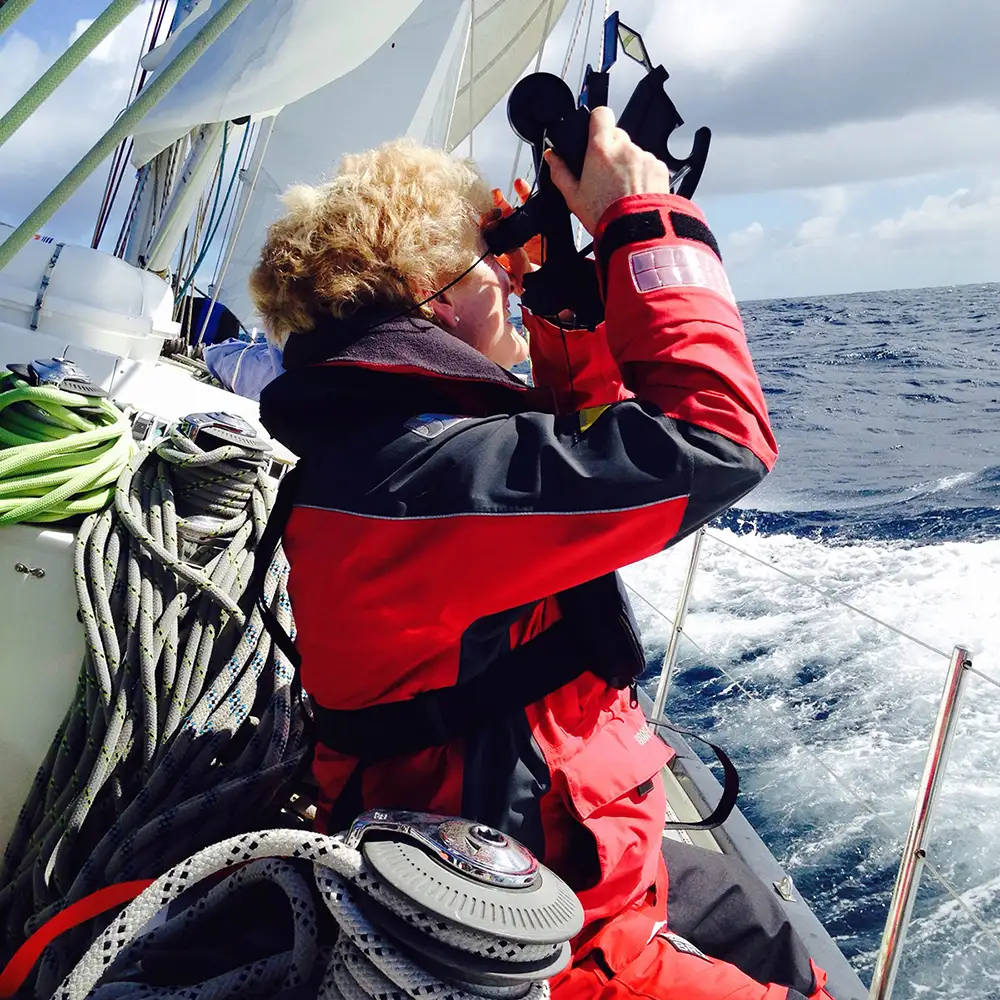
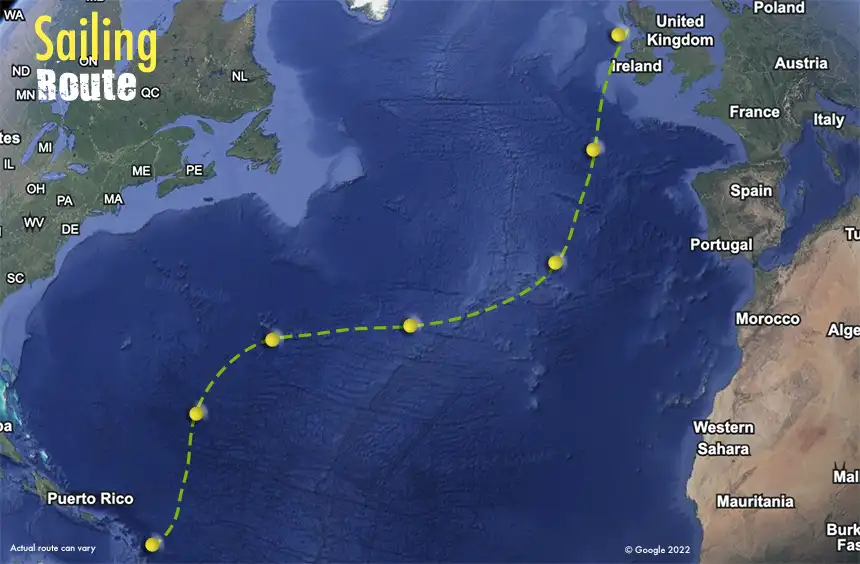
When the weather window opens, we set off northeast into the Atlantic and this is where the ocean sailing begins. Our route is shaped by the weather systems of the North Atlantic. We aim north towards Bermuda, often benefiting from stronger westerly flows and, at times, the Gulf Stream. Whether we stop at Bermuda for a day or two or curve east earlier depends entirely on conditions. We quickly settle into a watch system, with time spent helming, trimming sails, navigating, cooking, resting, and thinking.
We are navigating without referring to the GPS, but instead getting our position from the Sun and other celestial bodies. Sun sights and plotting become part of the daily rhythm. Sun sights at noon. Stars, planets and the Moon at twilight. Fixes plotted and discussed. Decisions made based on what we see and calculate. When you first fix your position with lines on the chart showing Venus, Mars, the Moon and others, it gives you a thrill you never forget.
Bermuda to the Azores. The Atlantic in its purest form
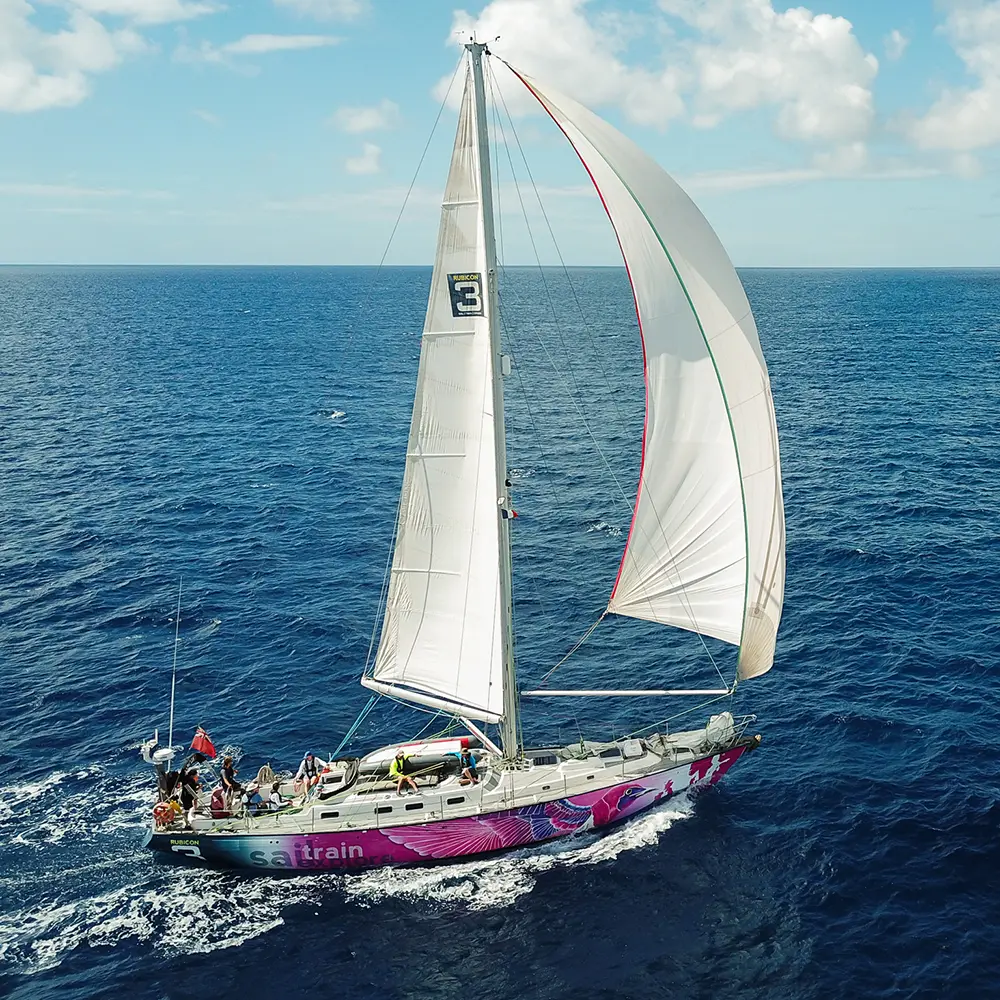
From Bermuda, we turn east for the long crossing to the Azores and around 2,000 nautical miles of open ocean. This is pure transatlantic sailing as the days blend into a steady rhythm of watches, navigation, meals, and rest. The weather can vary from drifting in flat calm to battling big seas and strong winds. Whales are common. Shipping is rare. Mostly, it is just the boat, the crew, and the horizon. Although celestial navigation is central to the experience, a full Atlantic passage is a huge life adventure in itself and every passage is unique. 1000s of miles from shore, sun, wind and salt in your hair, you will never forget these days
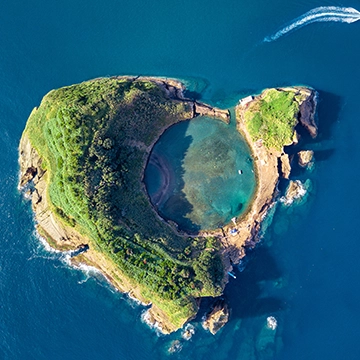
Your celestial navigation also improves rapidly on this leg. You’ll be building confidence in taking Sun, Moon and planet sights and your understanding of the process will be deepening every day and it is with a huge sense of achievement that the volcanic coast of the Azores appears on the horizon. This leg usually takes around two weeks at sea.
Landfall in the Azores
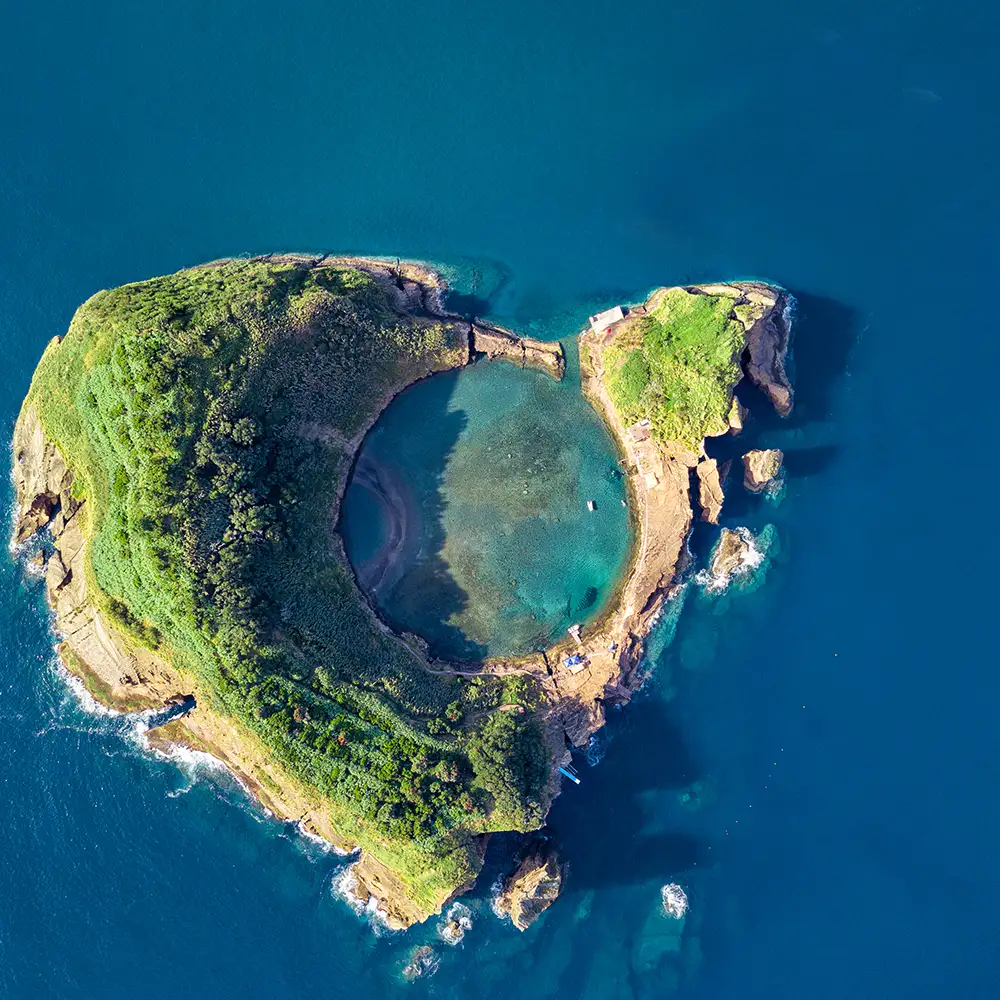
Having arrived in the Azores, we refuel, restock, and take on fresh food. How long we stay depends on our passage time and the next weather window, but even a short stop feels luxurious after weeks at sea. The islands are fascinating to explore and any spare time we have can be spent hiking and exploring but all too soon it is time to head to sea again for the final north east leg.
The final leg to Scotland
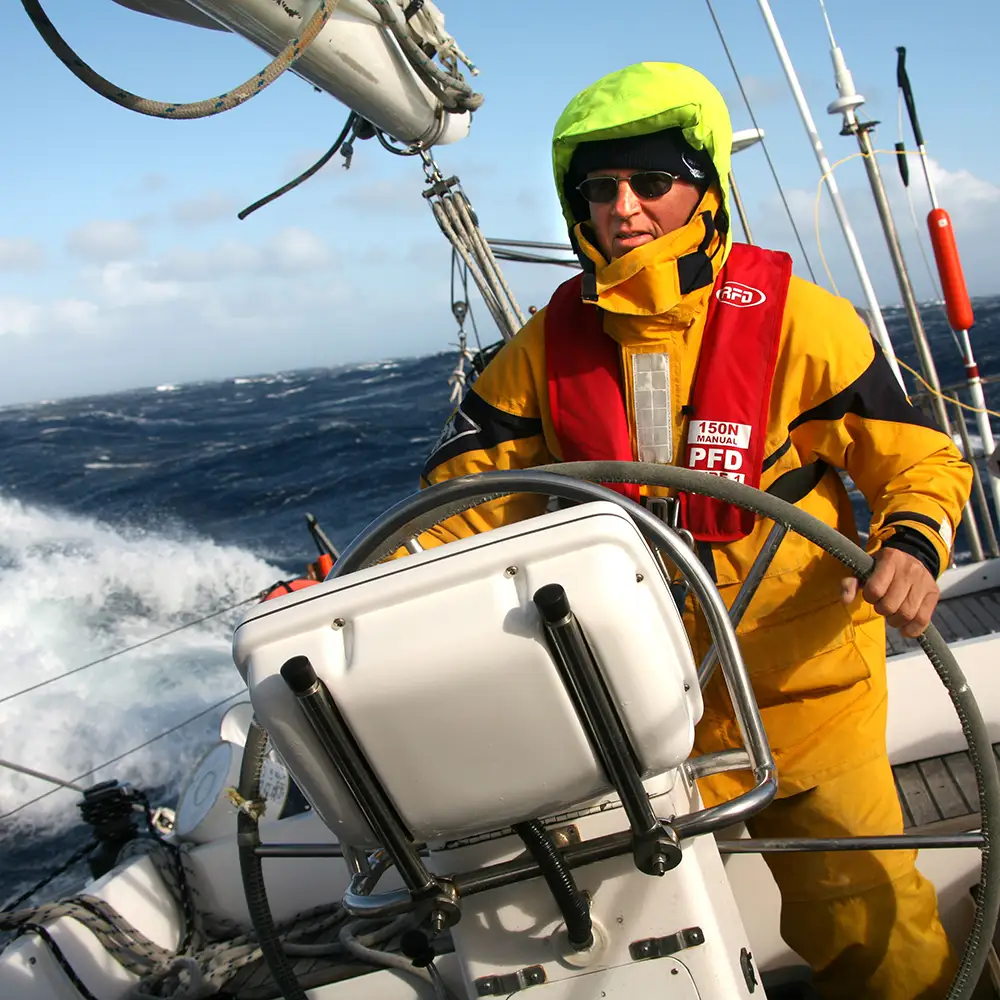
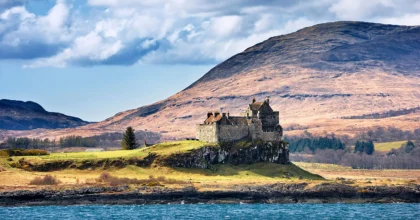
The last stage is the 1,300 nautical mile passage to Scotland. As we head northeast, conditions are usually a bit more challenging but we are now fully in the groove and sailing beautifully as a crew, and the tough, powerful Clipper 60 is in its element as we charge towards Ireland. Gradually, soundings return and shipping increases. Landfall approaches, with the hope of a day or two in Ireland and some of the most beautiful coast in Europe. Our destination of course is Largs on the west coast of Scotland though so we soon press on.
By the time we secure alongside, you will have not just sailed across the Atlantic Ocean but done so navigating by the Sun, Moon, stars, and planets. Life is about these magical moments, the thrill of the adventure and the huge sense of achievement that comes from such an undertaking.
Welcome to the crew!
Please note: Commercial regulations state we must still have full GPS capability on board, which will be used if safety is compromised.








 Trip Type:
 Instructors:
 Crew Size:
 Ages:
Ages:
 Region: