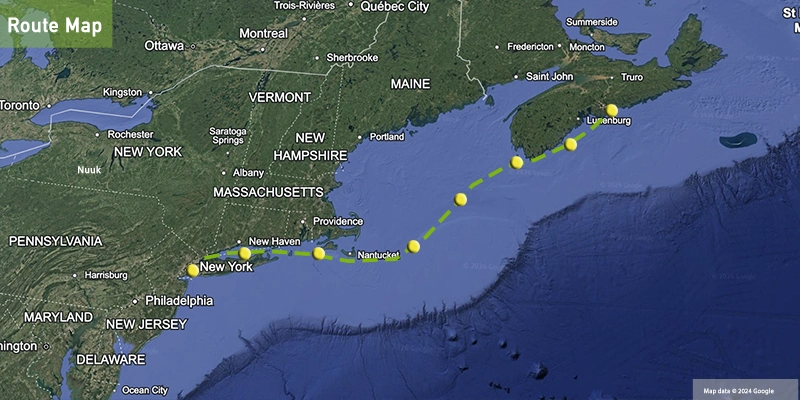
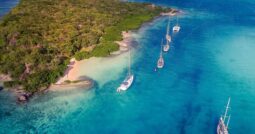
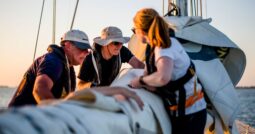
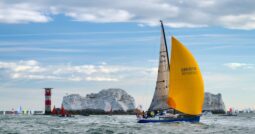
None of what follows is fixed. It is a sample of what the trip can hold, not a timetable. Each day the skipper and crew look at the wind and the forecast together and decide where to go next; that is how offshore sailing works, and it is half the fun. We might make every stop below, or trade some of them for somewhere better as the weather decides.
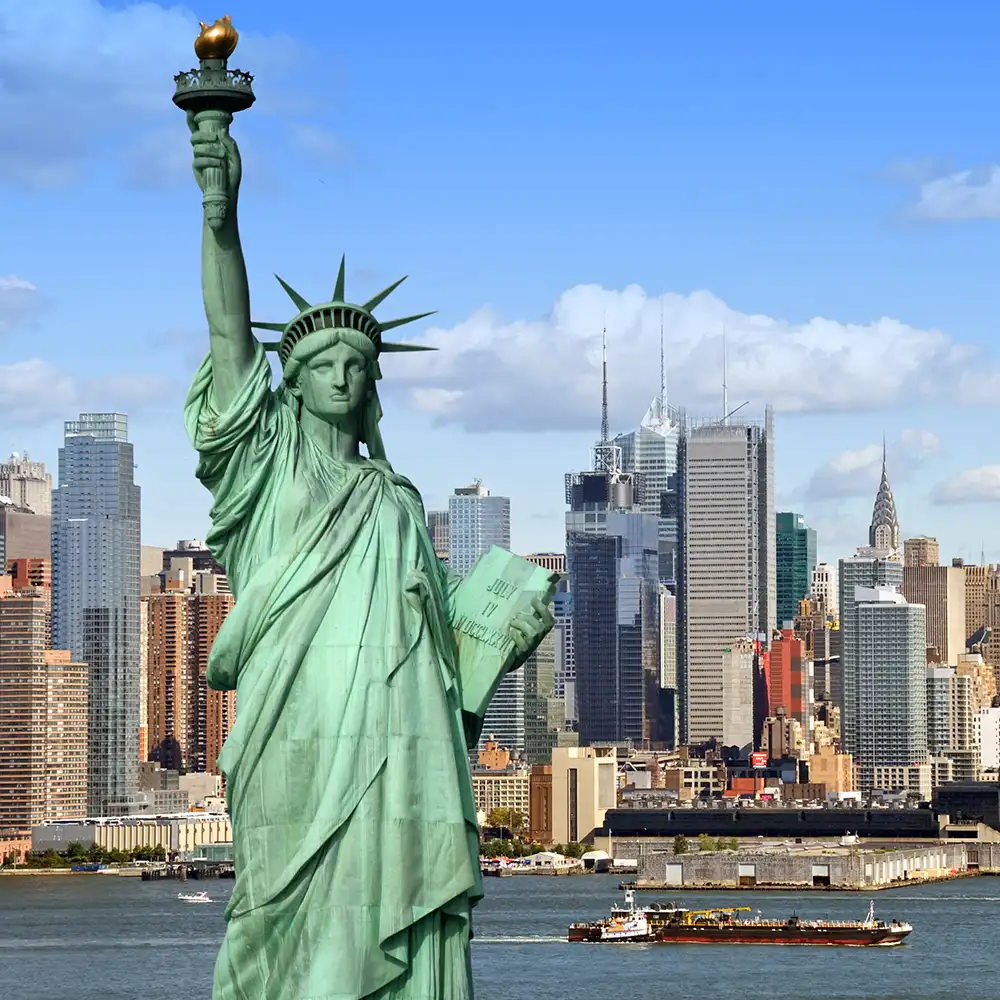
Join the yacht near New York City
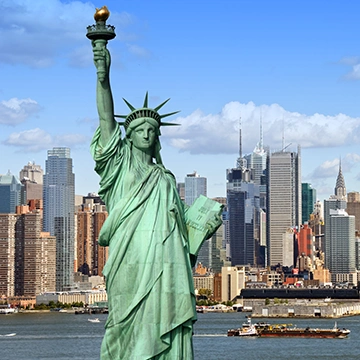
We join the boat in New Jersey, overlooking Manhattan. The first day is unglamorous: stowing food, finding your bunk, and the safety briefs and training that will keep you safe. Then we slip the lines. Past the Statue of Liberty, up the East River under the Manhattan bridges, and out into Long Island Sound on the evening tide, the city going gold behind us.
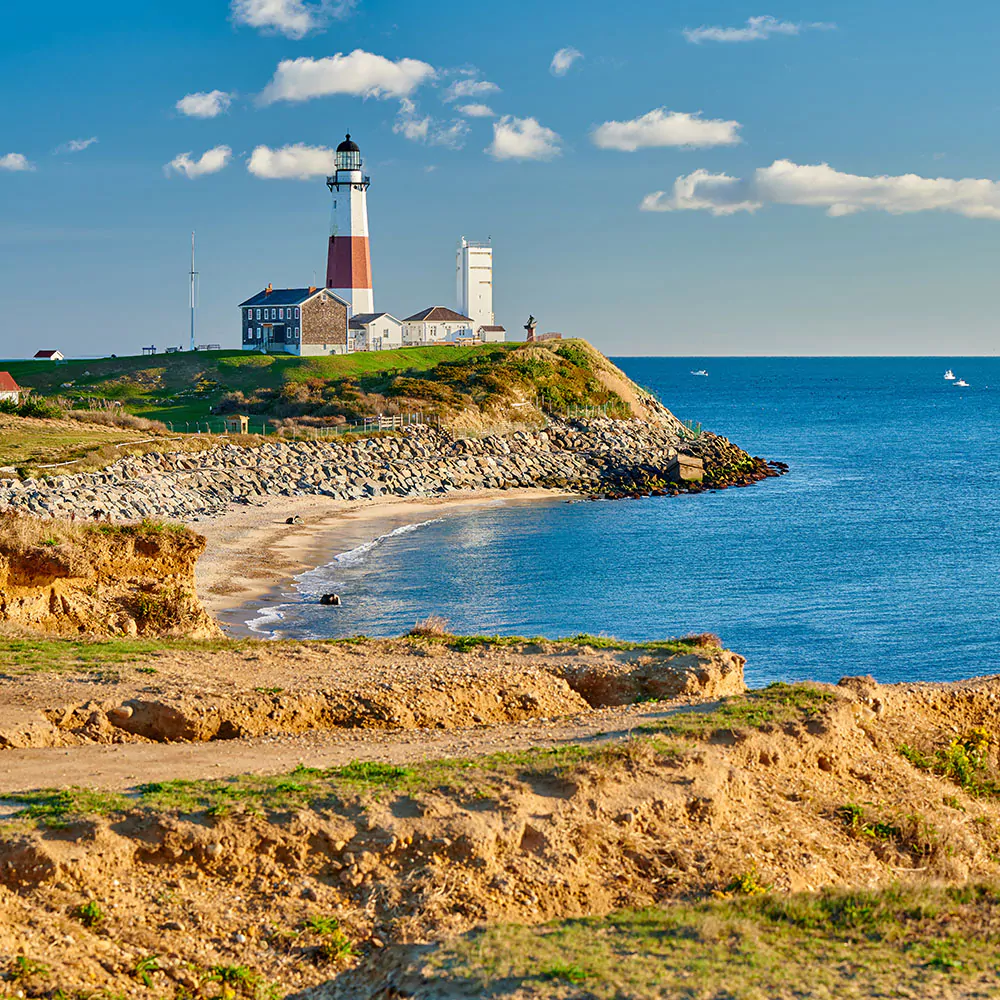
Long Island Sound
The Sound runs north-east between Long Island and the Connecticut shore: flat water and a soft start while the watch system beds in. We will likely anchor a night in Oyster Bay, under the lawns of the old Gold Coast mansions, and if the timing is right put in at Mystic Seaport, where they still build wooden ships by hand. Easy, pretty miles before the open sea.

Newport, Rhode Island
Newport has been the centre of American sailing since the schooner America brought home the cup that took her name in 1851. The waterfront is chandlers, docks and raw-bar oysters, and the Gilded Age tycoons left their summer cottages along Bellevue Avenue, which are mansions by any normal measure. We take on fuel and water, eat ashore, and have a last night alongside before the open sea.
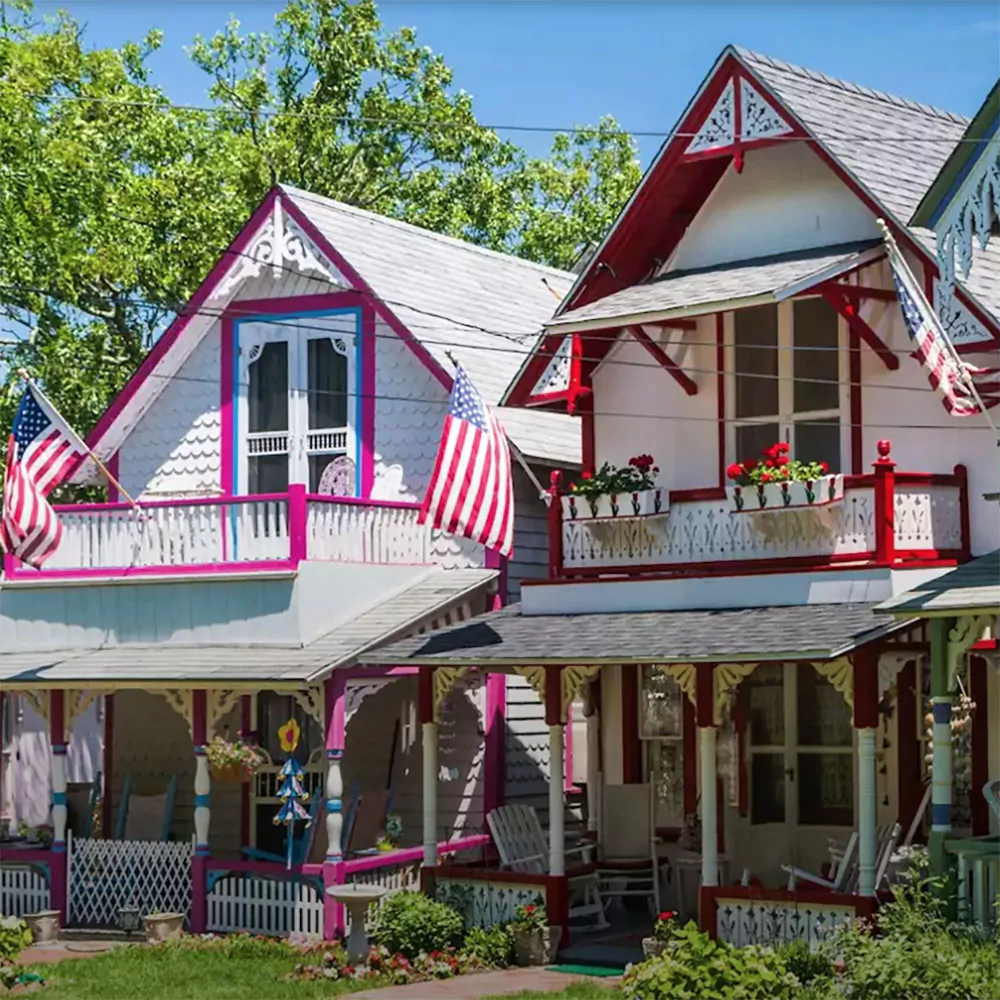
Martha’s Vineyard and Nantucket
Two islands off Cape Cod, and the last land for a while. Martha’s Vineyard has the gingerbread cottages and the painted lighthouses; Nantucket, thirty miles further out, made its fortune from whaling and never quite spent it, all cobbles and grey-shingled houses. We will stop at one if the weather allows. Then we top up the fresh food, go over the forecast with the skipper, and point the bow at Nova Scotia.
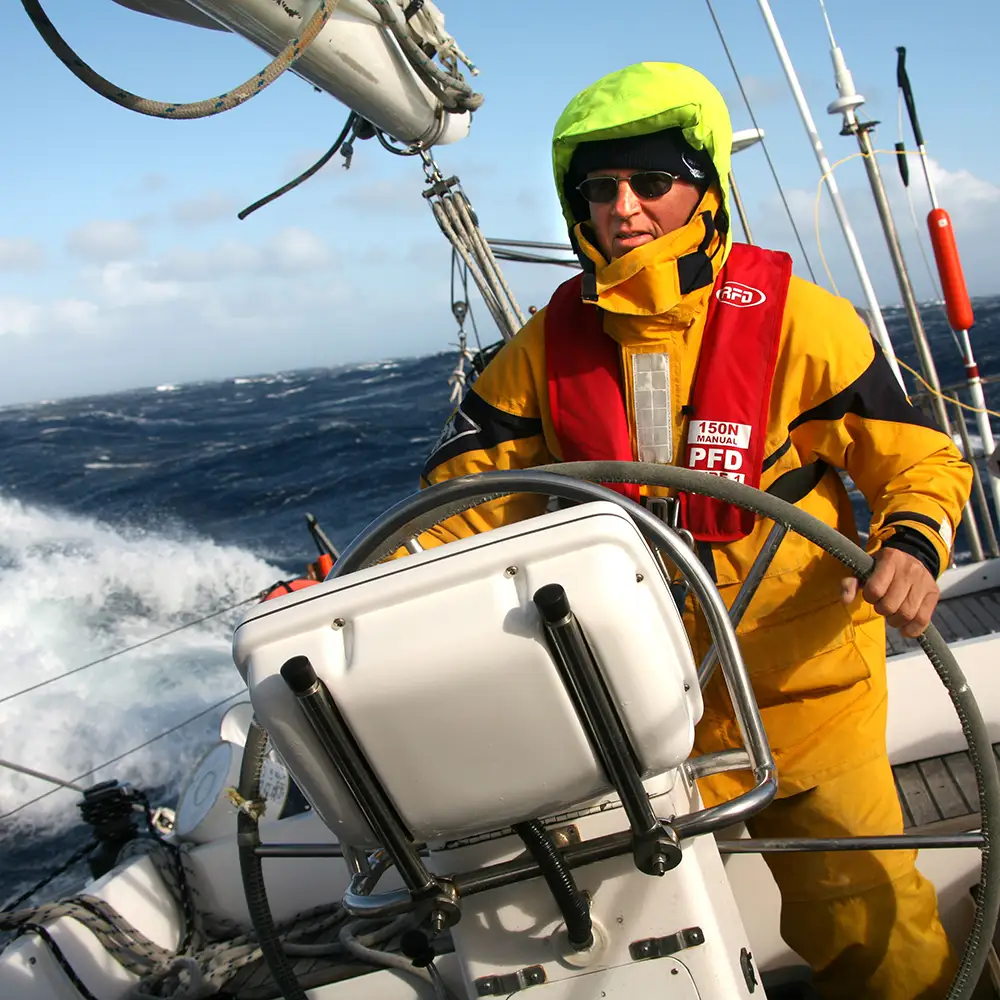
Offshore: across the Gulf of Maine
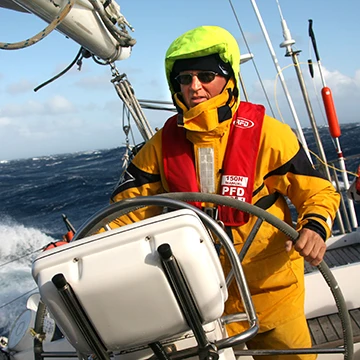
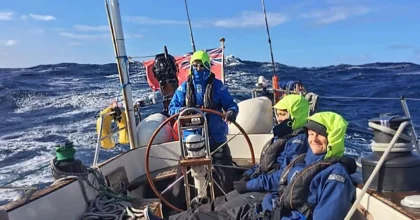
The coast drops astern. From Nantucket it is about 300 miles to Nova Scotia, two or three nights at sea with nothing on the horizon but weather. The watches turn, three hours on and six off. You take the helm in the afternoon sun and again at midnight, the wheel pulling in your hands and the wake glowing behind. Someone passes up a mug of tea at three in the morning and it is the best tea you will ever drink. We are north of the trade winds here, so the skipper watches the barometer closely and you will learn to as well; if you want it, this is where you take your first sight with a sextant and work out where the boat is from the sun. It can also blow, and the motion offshore takes a day to get used to. Then, one morning, land appears ahead: a low, dark line of spruce forest on the horizon. Nova Scotia. To arrive under sail like this stays with you for life.
Landfall: Shelburne
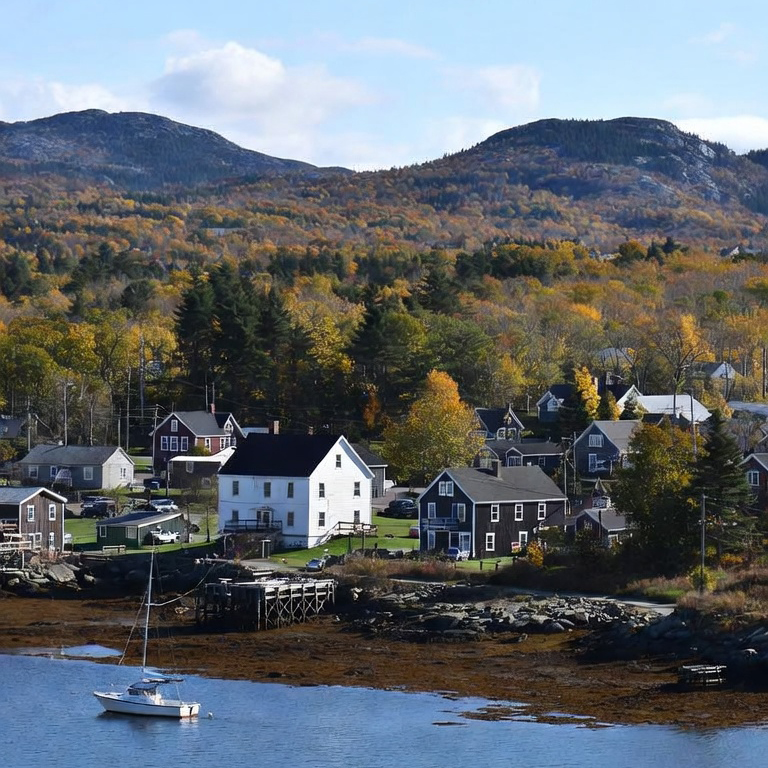
Our first harbour could be Shelburne, up one of the deepest and quietest inlets on the coast. The town went up almost overnight in 1783, built by Loyalists who had backed the losing side in the American Revolution and sailed north; for a few years it was one of the largest settlements in British North America. Their wooden warehouses still line the water, and a yard or two still builds boats by hand. After three days at sea, the first hot shower and the first cold beer ashore are worth more than they should be.
The LaHave River
Up the coast is the LaHave, a wooded tidal river that feels nothing like the ocean we have just crossed. We can anchor near the old cable ferry and row in to the LaHave Bakery on the wharf for bread out of the oven and a coffee. Still water, herons, woodsmoke. Nobody is in a hurry.
Lunenburg
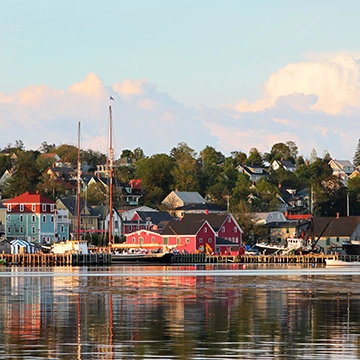
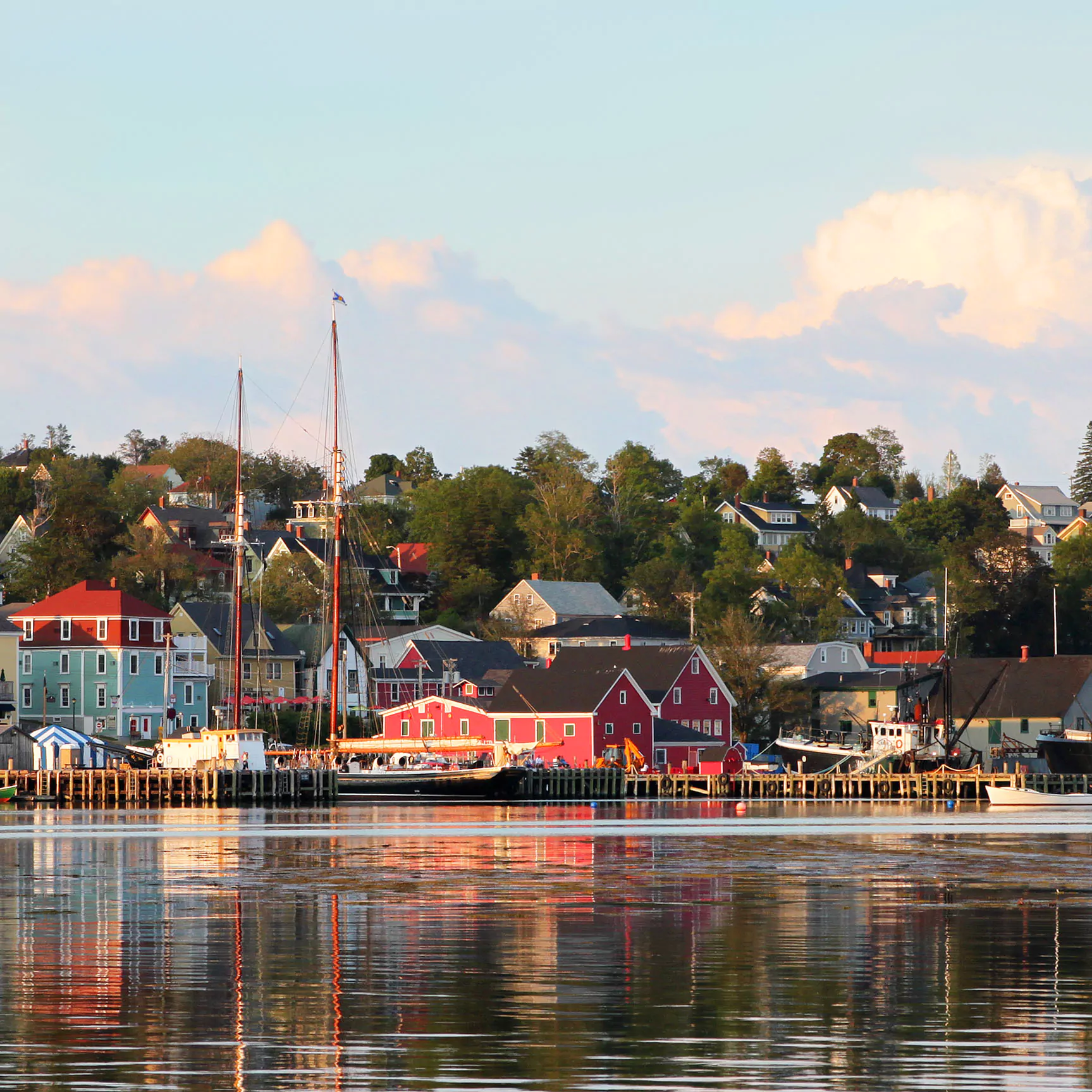
Then Lunenburg. It is a working fishing town painted in reds and ochres, laid out on a grid by German and Swiss settlers in 1753; seven in ten of the old buildings are the original timber, and UNESCO has listed the lot. The Bluenose, the racing schooner on the back of the Canadian dime, was built on this waterfront, and her successor still sails from it. We tie up, eat haddock and scallops off the wharf, and walk the hill streets in the evening.
Blue Rocks
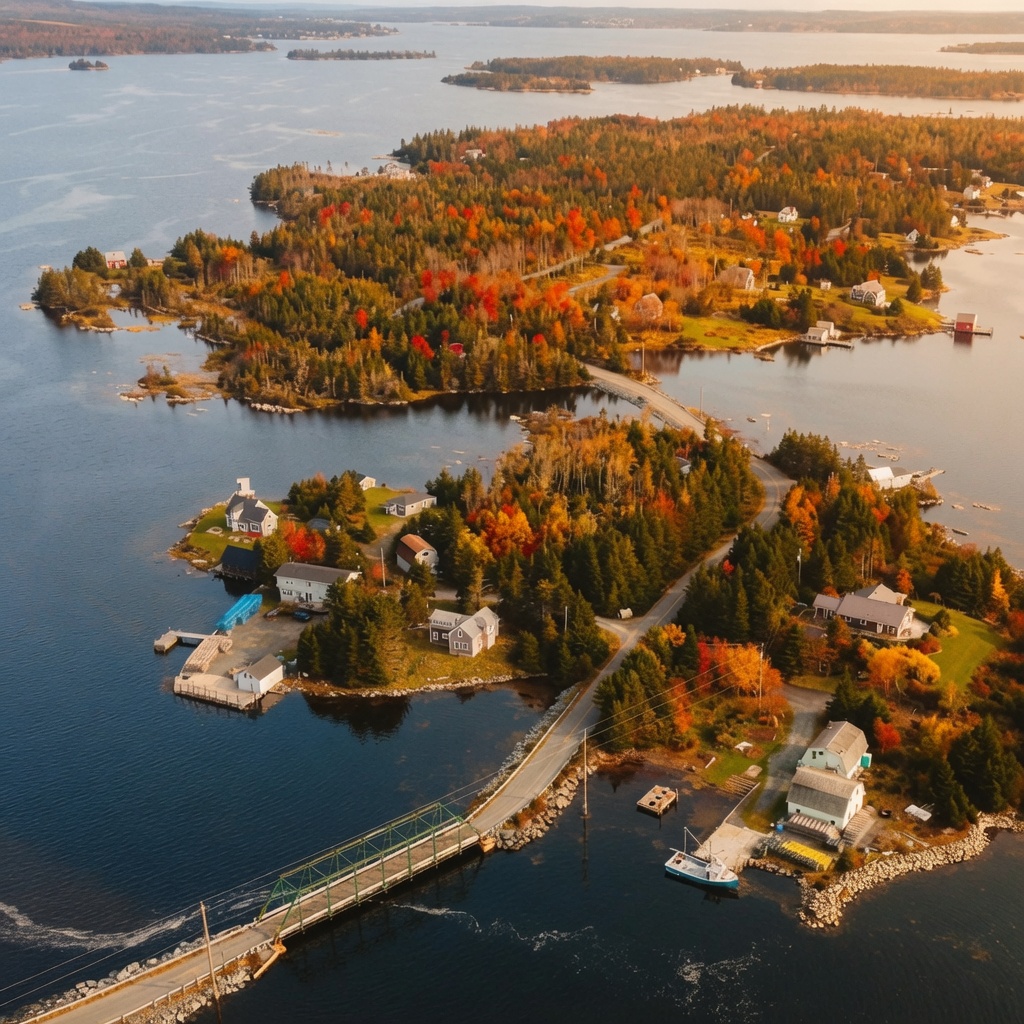
Round the point from Lunenburg is Blue Rocks, a scatter of fish shacks on ledges of slate that turn blue-grey in certain light. Lobster boats sit at their moorings, and the back of the harbour is a maze of little islands you can take the dinghy through. Worth being up at first light for.
Mahone Bay and the islands
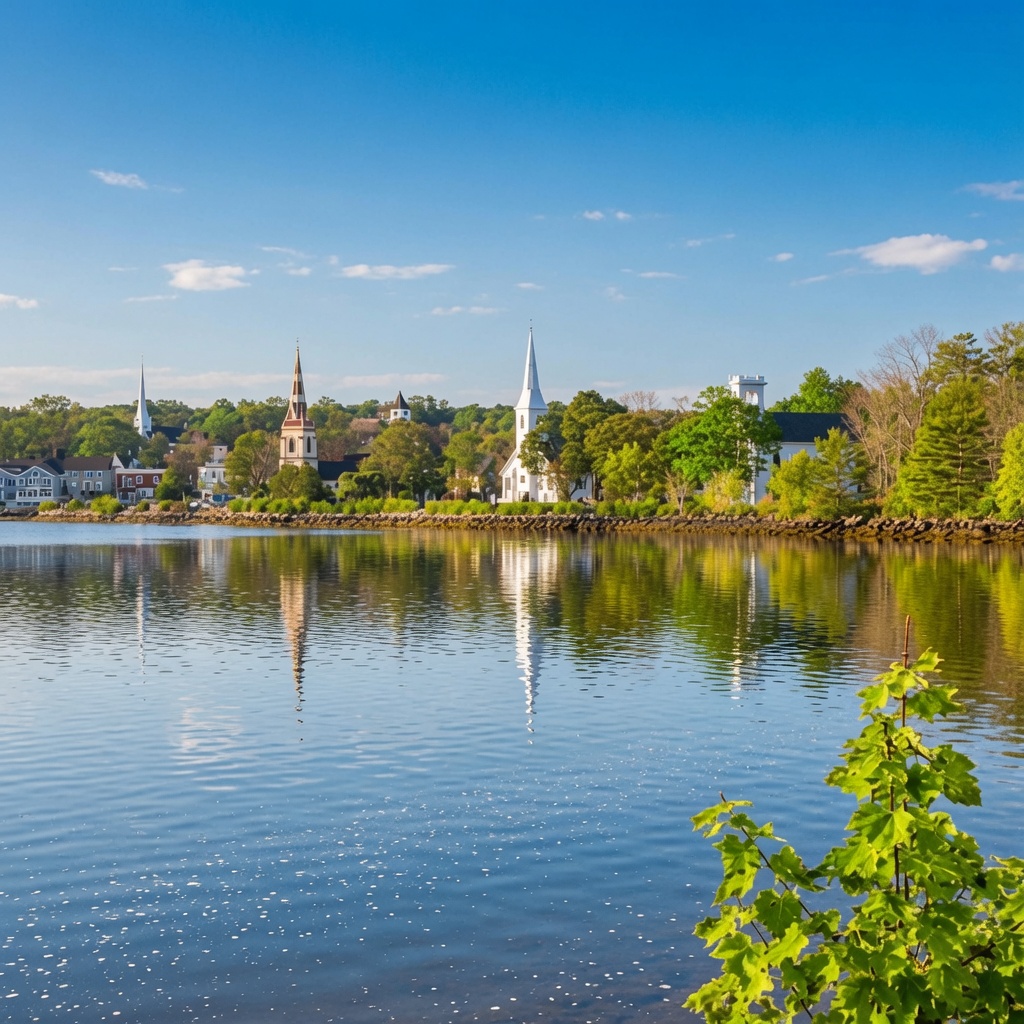
Mahone Bay is sheltered, kind sailing, and dotted with islands, three hundred and sixty-five of them by local count. We work between anchorages and put in at the town of Mahone Bay, where three churches stand in a row at the head of the water. Across the bay is Chester, which has raced sailboats every August since 1856, and from there it is a short row to Big Tancook, where they still make the sauerkraut the island is known for.
Peggy’s Cove
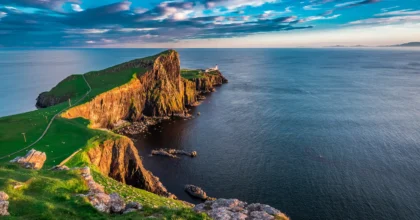
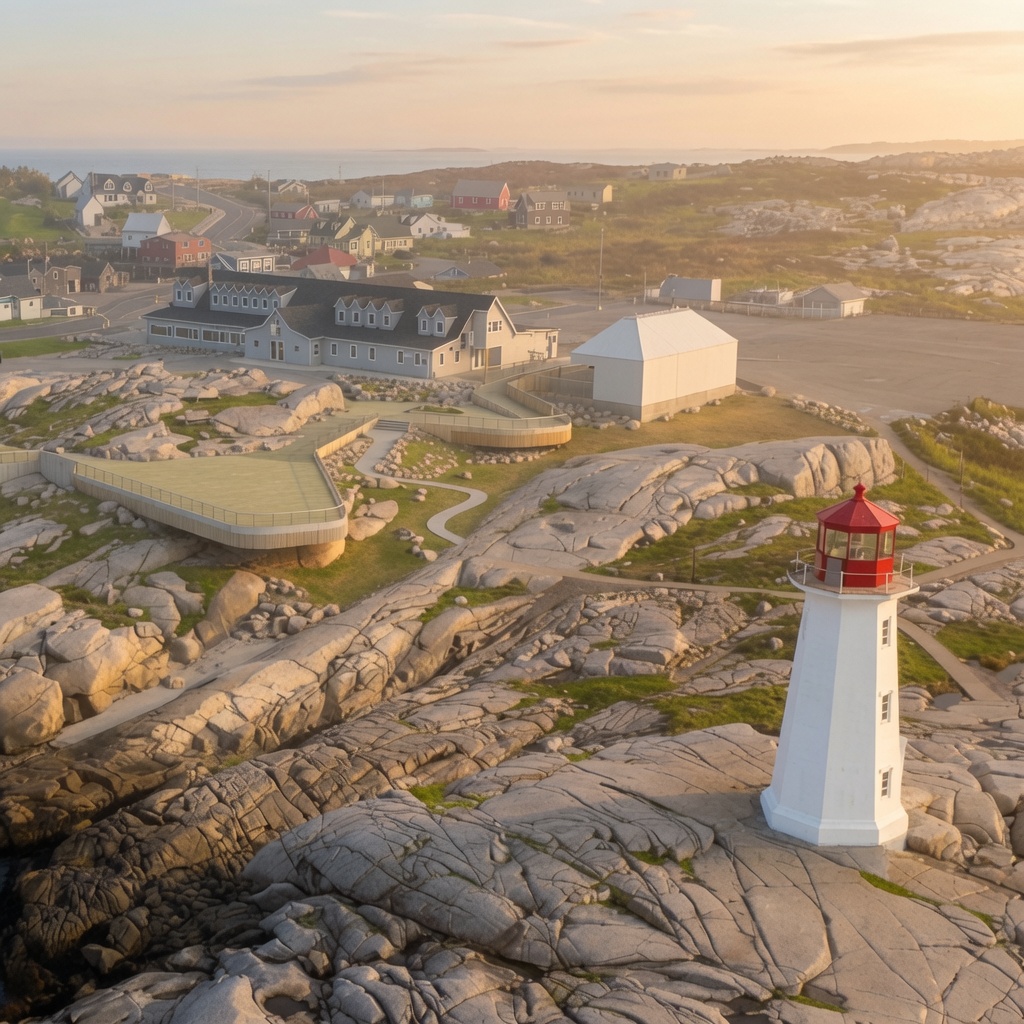
You will have seen Peggy’s Cove on a postcard: a red-and-white lighthouse on a whaleback of bare granite, the swell breaking white at its foot. The tour buses come for an hour and leave. We sail in from seaward and close right in under the light.
Journey’s end: Halifax
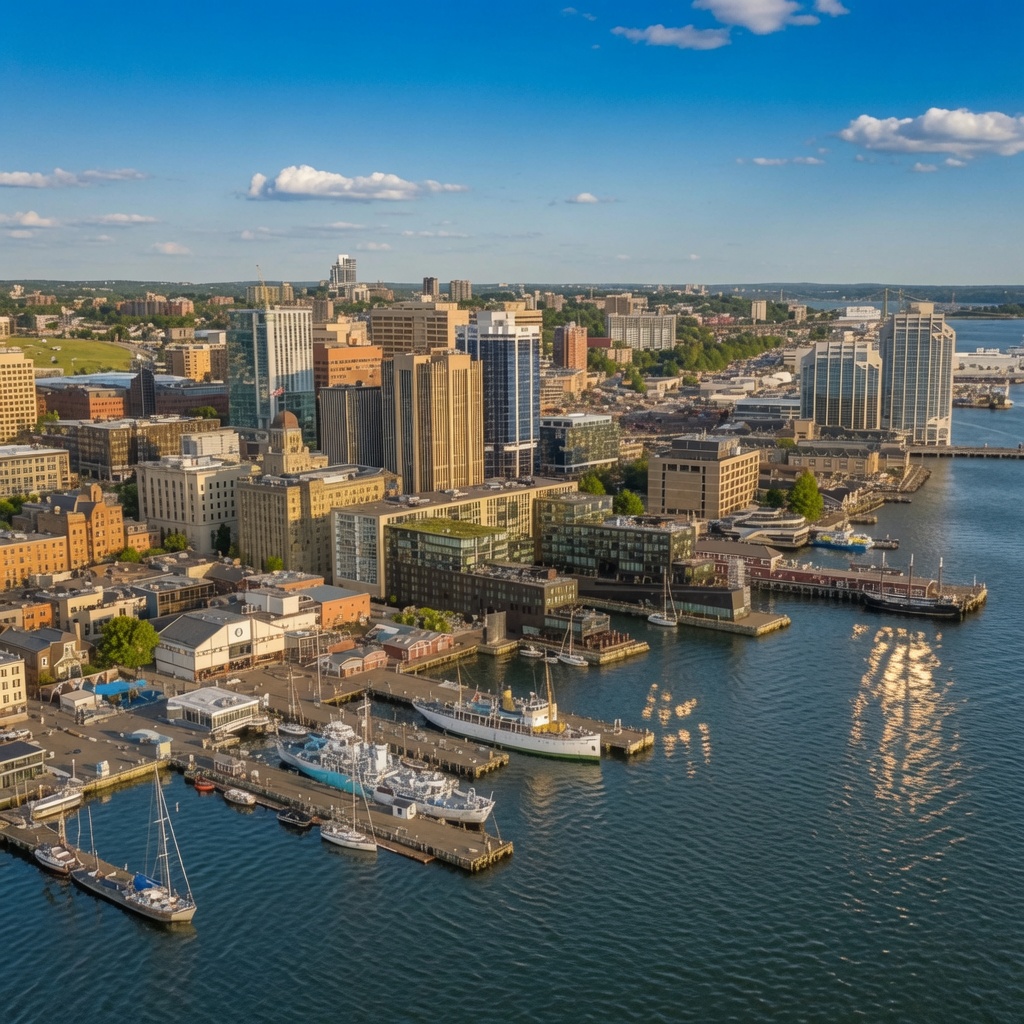
We come into Halifax past Sambro Island, where a squat stone lighthouse has stood since 1758, the oldest still working in the Americas and older than Canada itself. Halifax is a real port city, with one of the deepest harbours in the world and a long, walkable waterfront. The Maritime Museum of the Atlantic keeps the deckchairs and wreckage the city’s ships pulled from the water after the Titanic went down in 1912; 121 of her dead lie up the hill at Fairview Lawn, the headstones set out in a long curve like a ship’s hull. We tie up, the trip ends, and most of the crew are already working out which one they will do next.










 Instructors:
 Crew Size:
 Ages:
Ages: